Regenerative aesthetics
PRP Therapy: Autologous Plasma for Skin and Hair
How PRP is prepared, what research suggests for hair and skin, and why protocols, risks and expectations need transparent discussion.
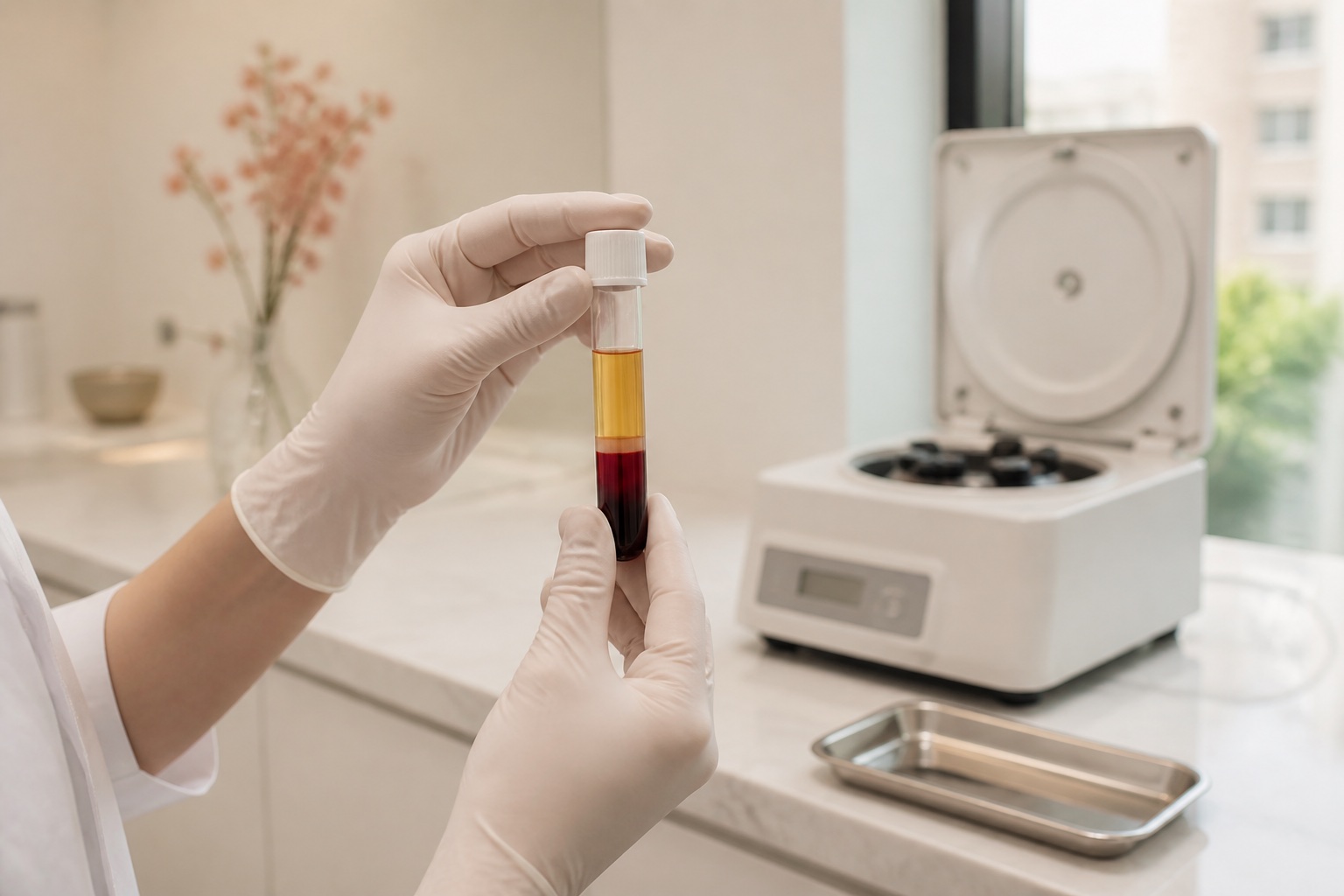
What is PRP?
PRP means platelet-rich plasma. After blood is drawn, components are separated by centrifugation and a platelet-enriched fraction is prepared for the intended use.
Preparation systems, cell concentrations and activation vary. PRP is therefore not an identical product everywhere, and study findings are not always directly transferable.
What happens during treatment?
Goals, diagnosis, medicines, clotting, infection and other risks are discussed first. After collection and sterile preparation, PRP is injected according to the indication. Pain, pinpoint bleeding, swelling and bruising may occur.
The number and interval of sessions cannot be promised as a universal package. They depend on indication, protocol, progress and reassessment.
PRP for hair loss
Systematic reviews describe possible improvements in hair density or thickness in androgenetic alopecia. At the same time, methods, comparators and study quality are heterogeneous.
PRP does not help every cause. Inflammatory, autoimmune, scarring or deficiency-related hair loss requires cause-specific care.
PRP for the face and skin
Different injection and combination protocols are offered for texture and regenerative aims. Evidence varies by goal and cannot guarantee tightening, scar correction or uniform rejuvenation.
Risks and contraindications
Even though PRP is autologous, pain, bruising, swelling, infection and temporary irritation are possible. Clotting disorders, certain medicines, active infection and relevant blood or systemic disease may require avoidance or further assessment.
PRP is not the same as a plasma pen, which uses an electrical discharge at the skin and has a different evidence and risk profile.
Frequently asked questions
01How many PRP sessions are needed?
There is no universal schedule. Indication, preparation, progress and evidence determine the individual plan.
02Does PRP help every form of hair loss?
No. The cause must be identified first, and many forms require different treatment.
03Is PRP the same as a plasma pen?
No. PRP is processed autologous plasma; a plasma pen creates an electrical discharge at the skin.